Truck DOT Requirements 49 CFR Part 396
Keep every truck inspected, registered and road-legal
One screen shows each unit’s annual inspection, plate registration, insurance and IRP status. Digital DVIRs catch defects and put unsafe trucks out of service until a mechanic signs off.
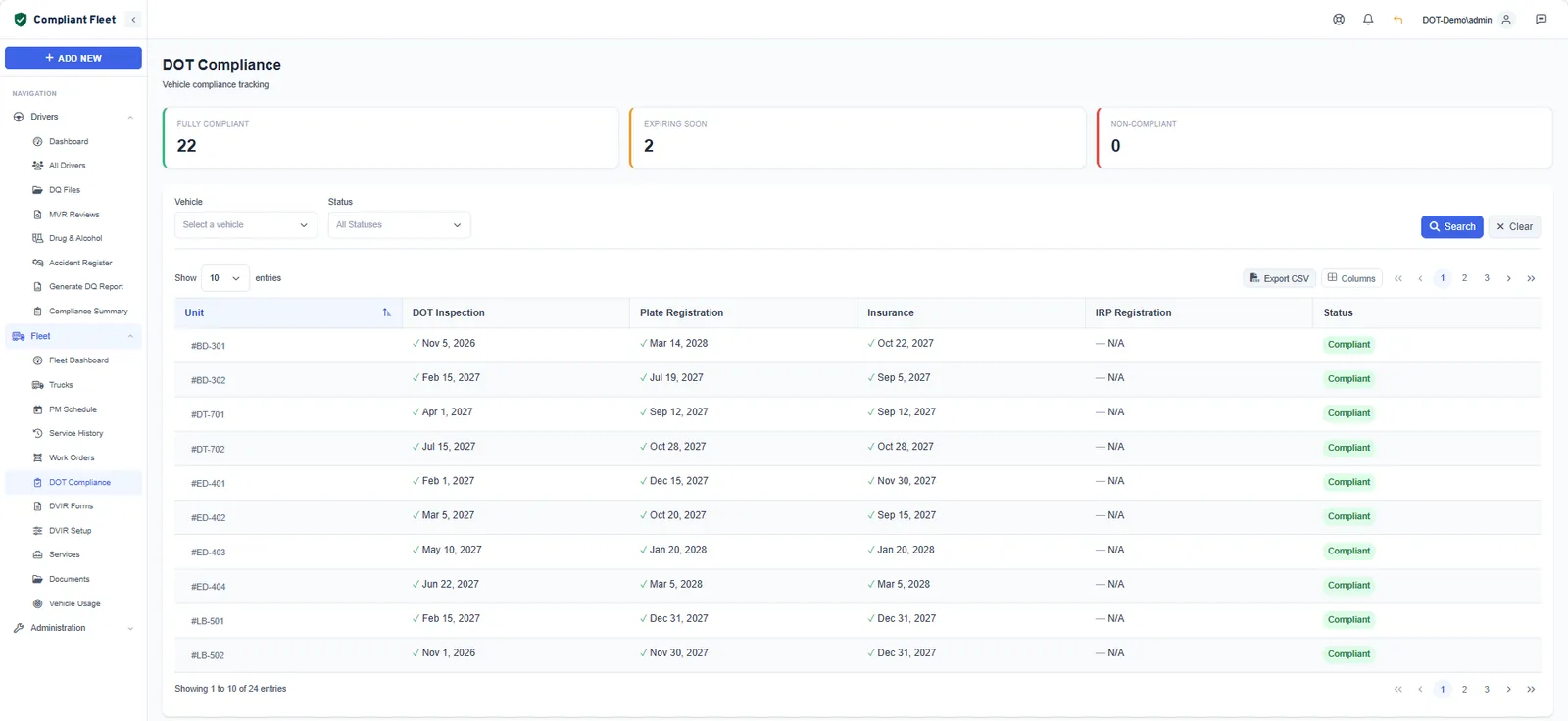
What are the DOT requirements for a truck?
Every commercial motor vehicle needs a periodic inspection at least once every 12 months, current registration and insurance, and IRP credentials if it runs apportioned. Drivers must report defects on a driver vehicle inspection report (DVIR), defects that affect safety must be repaired before the truck runs again, and the carrier keeps inspection, repair and maintenance records.
Truck DOT Requirements features
Truck compliance
Every unit’s paperwork status at a glance
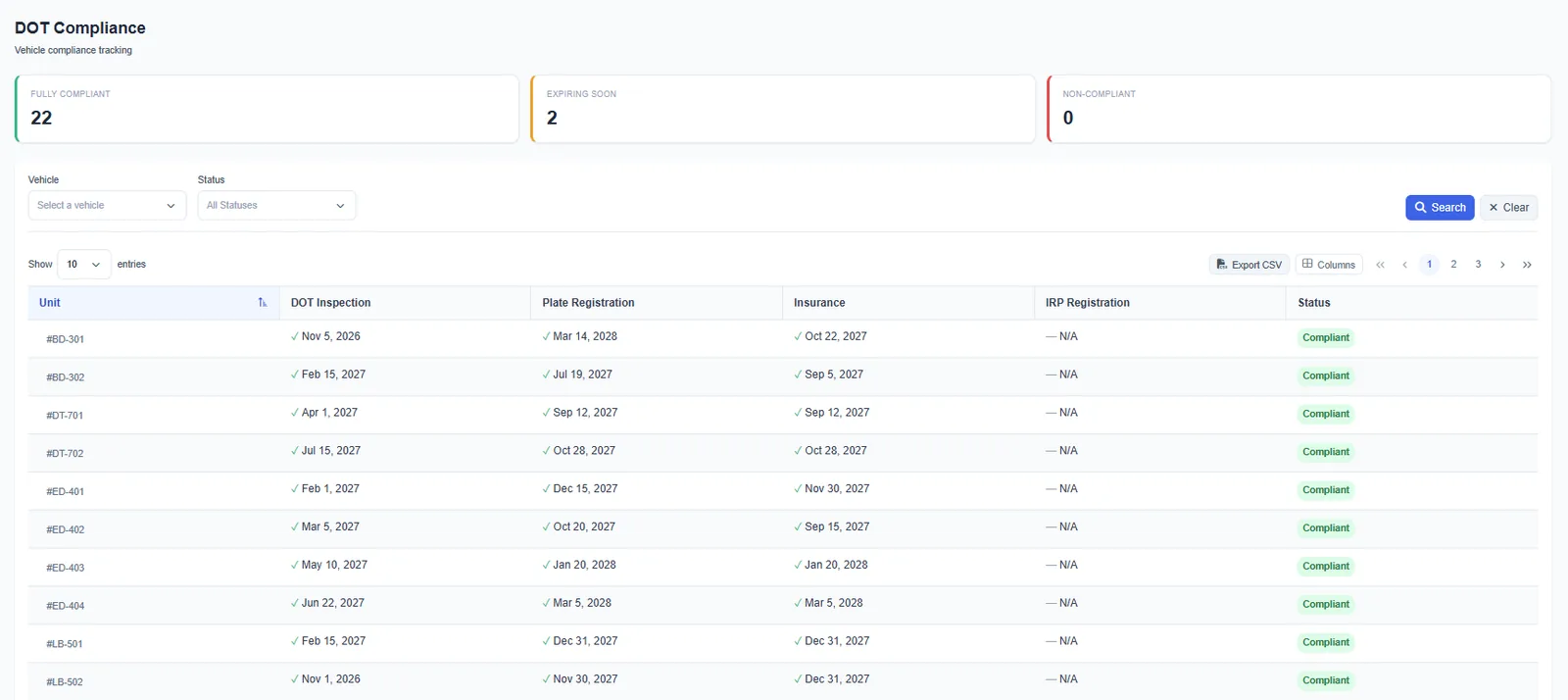
See the annual DOT inspection, plate registration, insurance and IRP dates for every truck in one table, with counts of units that are fully compliant, expiring or non-compliant. A nightly truck digest tells the office what’s coming due.
- Four core truck requirements, each with its own warning period
- IRP tracked only for apportioned units
- Filter by vehicle and status, then export to CSV
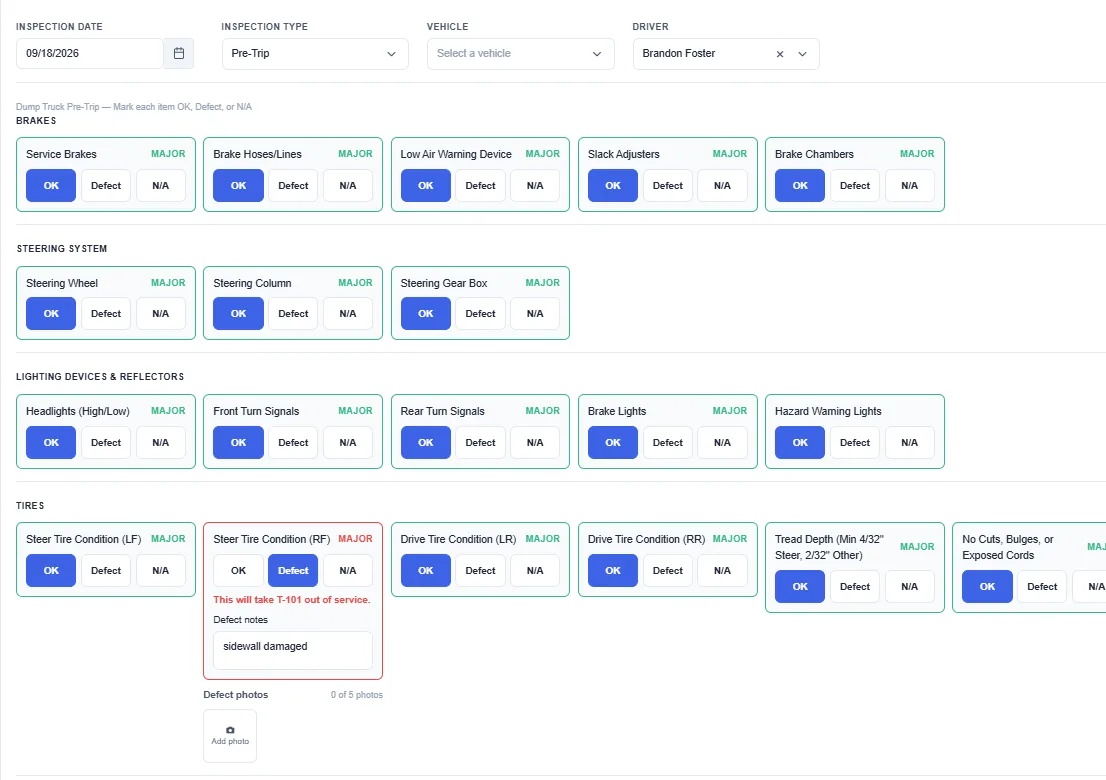
Digital DVIRs §396.11
DVIRs drivers can finish in a few taps
Drivers mark each item OK, Defect or N/A on a checklist that starts from the standard FMCSA catalog: brakes, steering, lighting, tires, wheels, coupling devices, emergency equipment and more. Defects take notes and photos, and every report is signed and saved as a PDF.
- Pre-trip and post-trip inspections in the driver app, even without a signal
- Photo rules per defect item, with notes
- Driver and mechanic signatures, and a PDF of every report
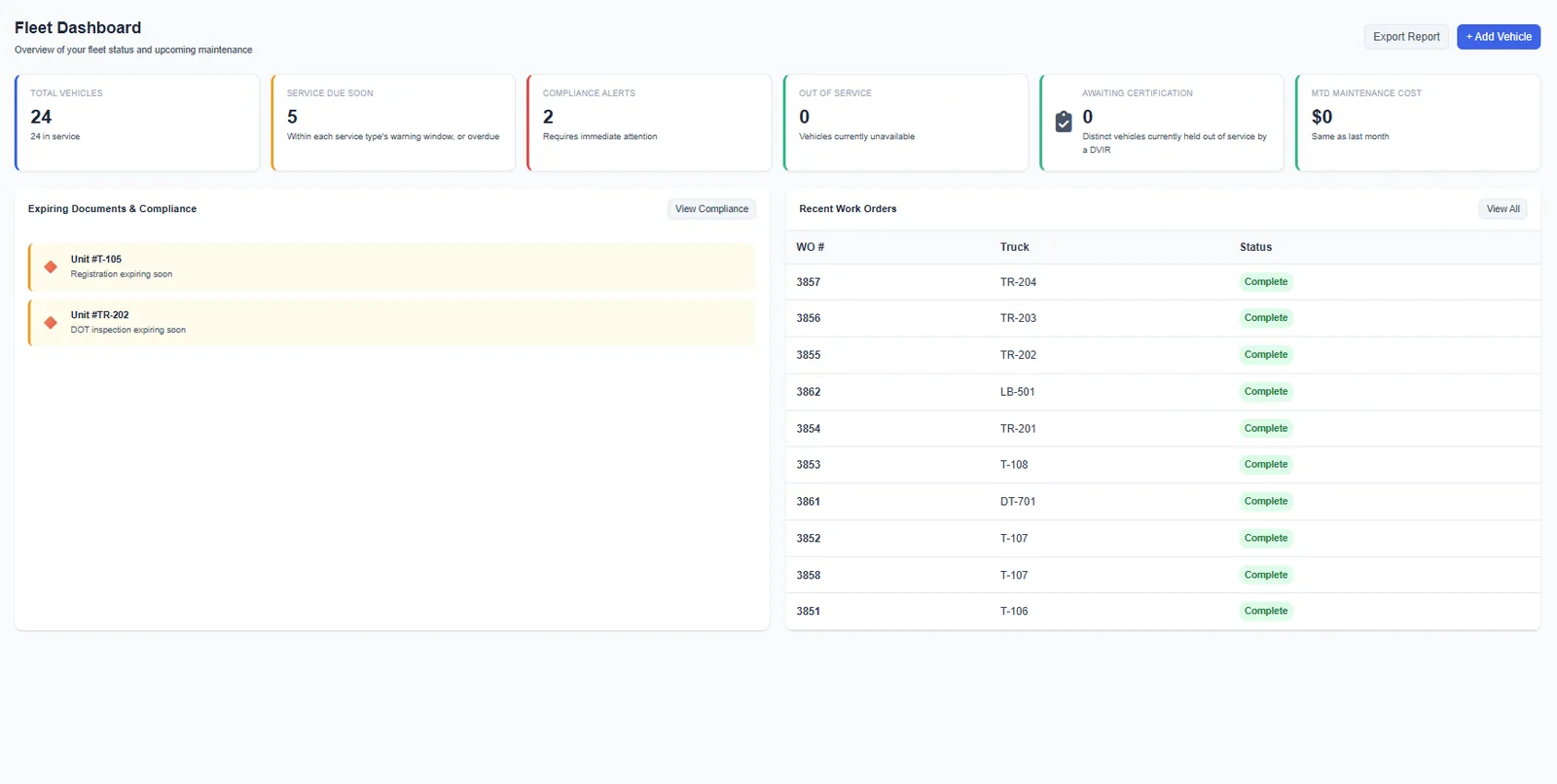
Out-of-service holds
A major defect takes the truck out of service
Mark checklist items as major or minor. When a driver reports a major defect, the truck goes on the out-of-service list with the reason and days out. It stays there until a mechanic certifies the repair, and the next driver reviews the report before driving.
- Out-of-service list with days out and the DVIR that caused it
- Awaiting Certification count on the fleet dashboard
- Review step before the next trip, as §396.13 requires
DVIR setup and history
Your checklist, your forms, your records
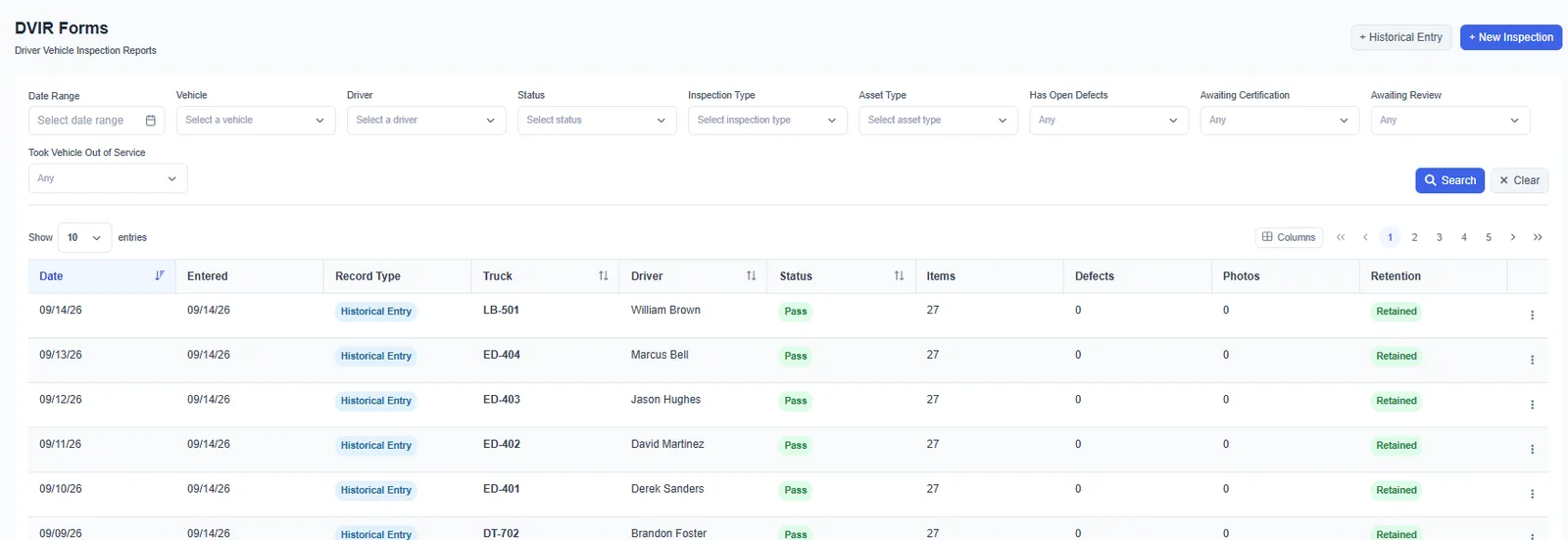
Start from the standard FMCSA catalog, then add categories and items for your equipment. Search DVIR history by date, vehicle, driver, status or open defects, and record older paper DVIRs as historical entries so your history is complete.
- Custom categories and items on top of the FMCSA catalog
- Search and filter every DVIR
- Retention status on each report
Reference
Truck inspection and recordkeeping rules
| Requirement | Regulation | When or how long | In Compliant Fleet |
|---|---|---|---|
| Periodic (annual) inspection | §396.17 | At least every 12 months | Inspection date per unit, with alerts |
| Keep the annual inspection report | §396.21 | 14 months | Stored in the truck’s documents |
| Driver vehicle inspection report | §396.11 | End of each day’s work, when a defect is found or reported | Digital DVIRs with photos and signatures |
| Review the last DVIR before driving | §396.13 | Before each trip | DVIR review step |
| Keep DVIRs and repair certifications | §396.11(a)(4) | 3 months | Retention status on each report |
| Inspection, repair and maintenance records | §396.3 | 1 year, and 6 months after the vehicle leaves your control | Service history per truck (see Vehicle Maintenance) |
| Registration, insurance and IRP | State and IRP | On each renewal cycle | Expiration tracking with alerts |
A summary for reference, not legal advice. Check the current text at eCFR, 49 CFR Part 396. Last reviewed September 24, 2026.
Questions
Truck DOT requirement questions
How often does a commercial truck need a DOT inspection?
Every commercial motor vehicle must pass a periodic inspection at least once every 12 months (§396.17), and the carrier keeps the inspection report for 14 months (§396.21). Compliant Fleet tracks each unit’s annual inspection date and warns you inside the window you set.
How long do I have to keep DVIRs?
Keep the original driver vehicle inspection report, the certification of repairs and the driver’s review signature for three months from the date the report was prepared (§396.11(a)(4)). Compliant Fleet stores each DVIR with its PDF and shows its retention status.
Do drivers have to fill out a DVIR if nothing is wrong?
No. Under §396.11(a)(2), a driver only has to prepare a DVIR when a defect or deficiency is found or reported. Many fleets still run pre-trip and post-trip DVIRs every day as good practice, and Compliant Fleet handles both.
What happens when a driver reports a major defect?
The truck goes on the out-of-service list with the defect and the number of days it has been out. It stays there, and shows under Awaiting Certification, until a mechanic certifies the repair. The next driver then reviews the report before driving, as §396.13 requires.
Can I track Form 2290, UCR or permits?
Today, truck tracking covers the annual inspection, plate registration, insurance and IRP, each with its own warning window. You can store other documents, such as a Form 2290 receipt, UCR confirmation or permits, in each truck’s document folder.
Does IRP tracking work if only some trucks are apportioned?
Yes. IRP status applies to the units you run apportioned. Trucks that are not apportioned show as not applicable instead of raising a false alarm.
Also in Compliant Fleet
Keep every truck ready for the scale house.
Load your units once and Compliant Fleet watches inspections, plates, insurance and IRP from then on.